All Categories
Featured

Website Tips for Better Conversions
As a marketing leader, you're asked to provide more than simply brand name awareness you need to drive profits. This short article goes over how a successful development marketing strategy moves beyond traditional methods, connecting every marketing action to quantifiable business results and sustainable growth. Modern CMOs and marketing leaders are anticipated to provide measurable organization growth by turning marketing into an earnings engine.
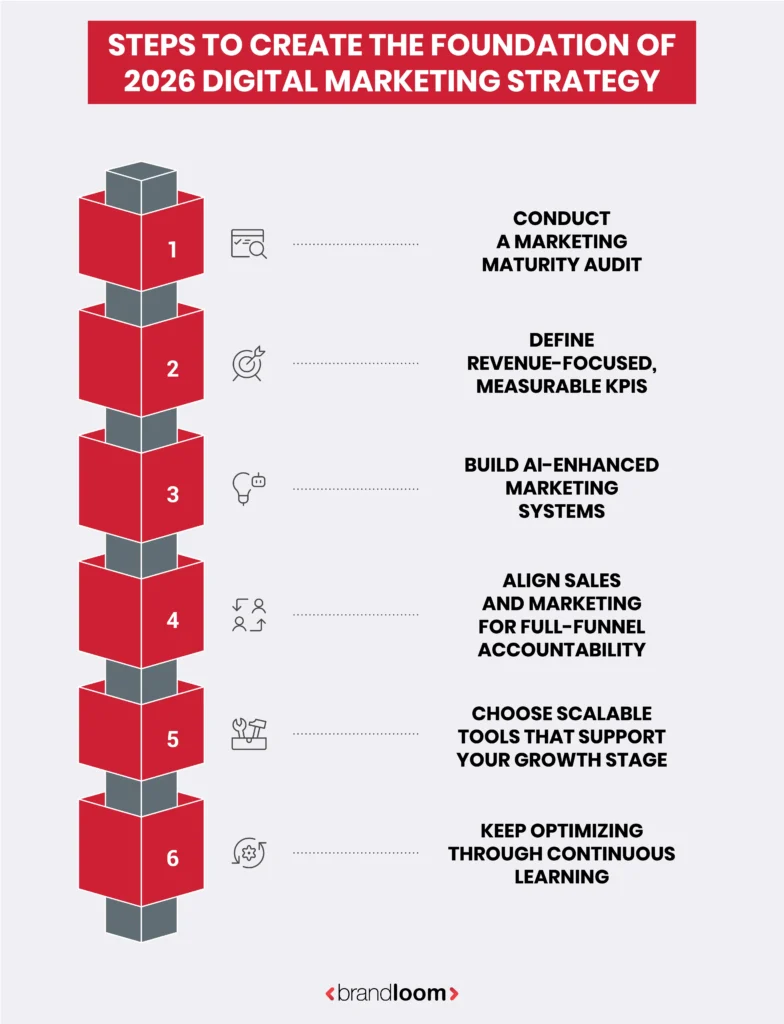
Growth marketing handles impact, linking every click, advertisement, and campaign to revenue and lifetime consumer value (LTV). While performance marketing focuses on instant outcomes, development marketing guarantees long-lasting success by aligning CAC and LTV across the customer lifecycle. If you're a marketing leader today, you are under more pressure than ever.
Marketing departments invest significant budgets into well-executed marketing campaigns, and the reports show promising engagement. It's still a challenge to draw a straight line from that activity to revenue.
It's about shifting your technique from seeing marketing as a cost center to building it into a foreseeable, data-driven development engine. Where conventional marketing frequently concentrates its efforts on the top of the marketing funnel awareness and acquisition development marketing takes a holistic view.
Its origins remain in the world of "development hacking," a term that became well-known thanks to the ingenious and often low-cost strategies used by tech start-ups to achieve meteoric growth. These techniques were nimble, creative, and centered on high-velocity experimentation. They were born out of necessity: when you have a small budget plan, you need to be smarter and much faster than the competition.
Your Future of Paid Media: 2026 Forecast
It takes the agile, experimental spirit of growth hacking and uses it with strategic discipline throughout the whole company. A successful growth marketing strategy has to do with building a robust, repeatable system for continuous enhancement and scalable development. It's what enables established companies to innovate and grow with the speed and performance of a start-up.
Digital marketing and development marketing are fundamentally different in their scope and focus. Digital marketing is the craft of using digital channels to reach an audience.
This includes core activities like: Seo (SEO)Pay-Per-Click (PAY PER CLICK) AdvertisingSocial media marketing and creating social networks postsContent marketing and email newsletter campaignsThe primary goal of a digital marketing expert is frequently to excel within these channels: to improve rankings, lower cost-per-click, or boost engagement. These are important abilities for any modern-day service.
Proven Ways to Reduce Ad CPA
It's a more comprehensive discipline that looks beyond channel metrics to the whole client journey. Performance marketing is another discipline that shares DNA with growth marketing, particularly its focus on measurable outcomes. Their views are different. Efficiency marketing is a design where you spend for particular, quantifiable actionsa click, a lead, and a sale.
[target2:anchor_exact1]The focus is transactional and geared towards optimizing the ROI of specific marketing campaigns. It responds to the concern, "How effectively are we buying this specific result?"Growth marketing includes the rigor of efficiency marketing however extends it across the full marketing funnel. An efficiency online marketer's task might be considered a success when a lead is acquired at a low cost.
They will track that lead's entire lifecycle to comprehend its true worth. A development online marketer may find that those leads have a much lower conversion rate and a greater churn rate, making them less valuable in the long run.
Typically, this included broad marketing projects developed to fill the top of the funnel. Development marketing changes demand generation by making it a more precise and clinical procedure.
This is done through a couple of essential shifts:: A growth-led demand method doesn't end when a lead is passed to sales. It tracks the lead's development, enhancing metrics like lead-to-opportunity rate and sales cycle speed. This produces a powerful alignment in between marketing and sales.: By leveraging user data, development marketing moves beyond generic messaging.

Latest Posts
Adapting US Paid Marketing to 2026 Standards

Scaling Paid Growth Results Via Modern Tactics
Scaling Digital Media Success Via Modern Tactics