All Categories
Featured
Leveraging Data Modeling for High-Conversion Paid Media
Isolated aspects get attention. designs match natural eye movement. Position your essential info along these patterns. Customised landing pages that adjust to visitor context regularly outperform generic pages. Personalisation can be based upon:, Program the search term in the heading, "Landing Page Firm in London" vs generic, Various messaging for social vs search vs e-mail, Dynamic material blocks targeting specific verticals, Acknowledge returning traffic with upgraded CTAs You do not require complicated personalisation technology to start.
Exit-intent pop-ups appear when the visitor's cursor approaches the web browser's close button. They are a last-chance conversion opportunity for visitors who are about to leave. Reliable exit pop-ups: Offer something various from the main page CTA (a lower-commitment deal) Use strong, benefit-driven headlines Keep the kind to 1-2 fields maximum Consist of a clear "No thanks" choice, required engagement backfires When done well, exit pop-ups recover 3-5% of otherwise-lost visitors.
Use a structured structure: 1 Collect Heatmaps, analytics session recordings WHERE do they drop? 3 Prioritise Legendary framework impact confidence ease WHAT to evaluate? 4 Test One variable at a time 95% self-confidence minimum RUN the experiment 5 Document Record wins + losses Develop knowledge base LEARN & repeat A structured A/B screening process, test with intention, not intuition.
"Users are bouncing because the heading does not match the advertisement copy" is a hypothesis. "Let's try a blue button" is a guess. Score each test throughout these four measurements to focus on the highest-ROI experiments.
Wait for analytical significance (generally 95% self-confidence with at least 100 conversions per variation). In our experience, the highest-impact tests are (in order): headline copy, CTA text, kind length, social evidence placement, and above-fold design.
Predictive Analytics in Ads 2026
You can't optimise what you don't determine. At minimum, track these metrics: MetricWhat It Tells YouTarget Conversion RatePercentage of visitors who finish the goalIndustry average or above Bounce RateVisitors who leave without interactingBelow 60% for landing pages Time on PageEngagement level with your content30+ seconds for lead gen pages Scroll DepthHow far visitors read60%+ reaching CTA Type AbandonmentVisitors who begin however don't end up the formBelow 40% Expense Per ConversionAd spend effectiveness for pay per click pagesBelow your target CPA/ROAS Establish conversion tracking in Google Analytics, Google Ads, and your landing page platform before launching any optimisation work.
At Apexure, we utilize a structured framework for each conversion optimisation task. We call it the because uncertain messaging is the origin of a lot of conversion failures. 1 Diagnose Heatmaps & session data 2 Clarify Value prop & headline reword 3 Trust Social evidence & trustworthiness signals 4 Simplify Eliminate friction & reduce forms 5 Test A/B test, measure & repeat The Clarity-First CRO Framework, address clearness before testing to prevent losing time on inconclusive experiments.
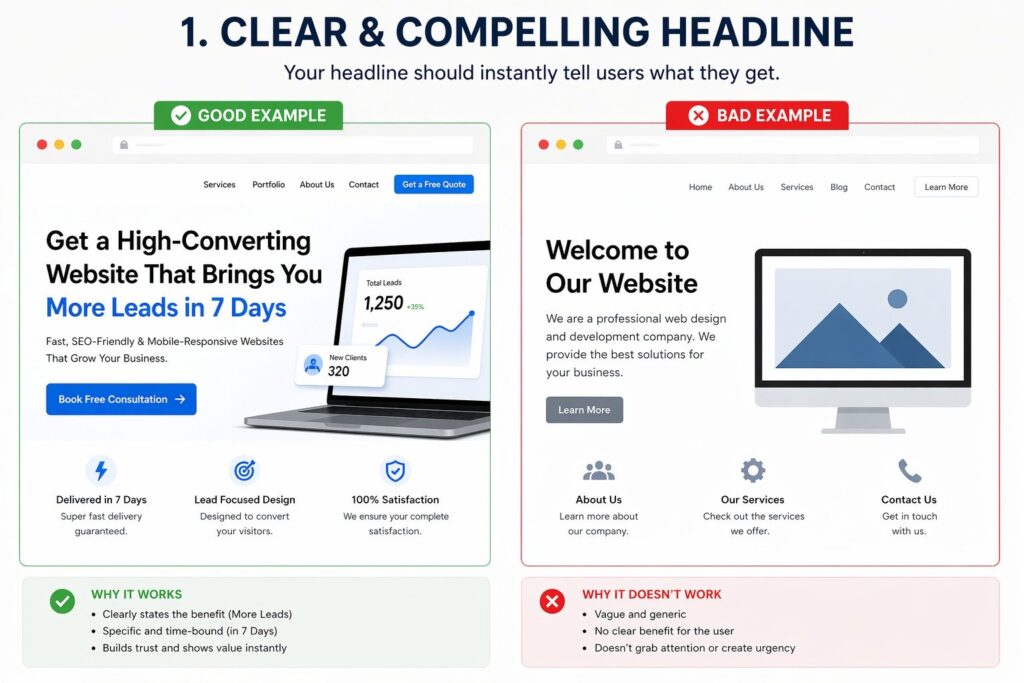
[target2:anchor_exact1]Reword the worth proposal, headline, and CTA to remove ambiguity. Apply the 5-second clarity test. Include or rearrange social proof, trust badges, and credibility signals near choice points. Get rid of distractions, shorten forms, and minimize cognitive load. A/B test each change individually. File results. Iterate. This framework works due to the fact that it resolves the three failure modes in priority order: clarity initially, trust 2nd, friction third.

Maximizing Paid Growth Via CRO
Visitors were puzzled, a timeless Phase 1 clarity failure. We upgraded the page with a hero section video introduction that pre-qualified visitors, included a 60-day money-back warranty, comparison table, FAQ section, and clear "Set up a 15-Minute Call" CTA.
[target1:anchor_exact1]A high conversion rate on unqualified leads wastes sales group time. A page that looks perfect on your MacBook might be unusable on a phone.
Their page might look successful but you do not understand their conversion rate. Optimise based upon your own information. Wholesale redesigns are dangerous. Incremental, data-driven changes are safer and more reliable. Including tracking scripts, chat widgets, and animations without determining their impact on load time and conversions. The typical landing page conversion rate throughout industries is approximately 2.5-3.5%.

Latest Posts
Adapting US Paid Marketing to 2026 Standards

Scaling Paid Growth Results Via Modern Tactics
Scaling Digital Media Success Via Modern Tactics